
HOME HEALTHCARE GUIDE · DUBAI
Physiotherapy at home: practise where daily life happens
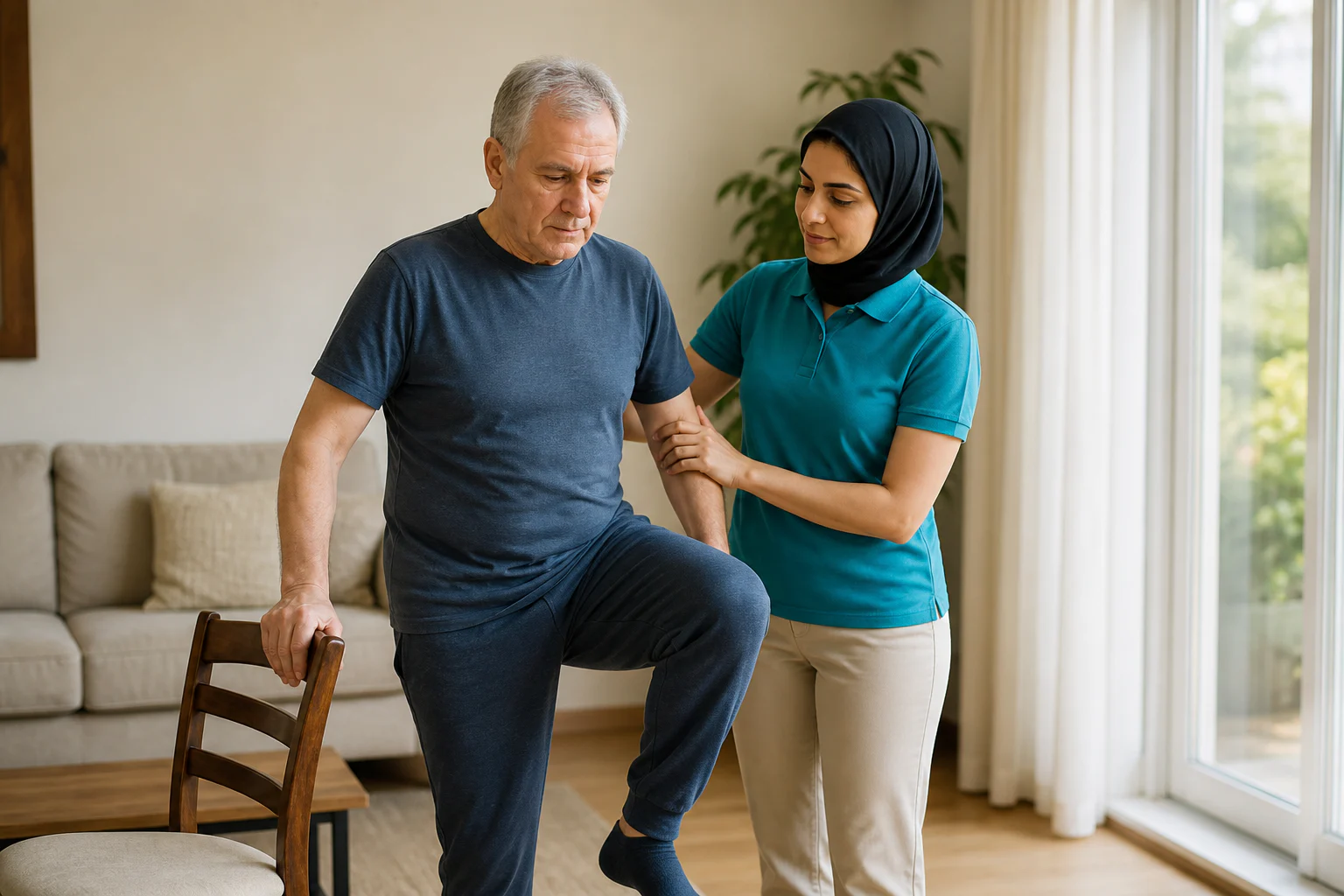
Home physiotherapy lets the therapist assess movement, function and hazards in the environment where daily activities happen. A useful plan begins with goals and baseline ability, uses safe exercises and practical modifications, and measures progress rather than promising a fixed recovery.
What should the first assessment cover?
The physiotherapist should review the health history, pain, falls, surgery or diagnosis, mobility aids, daily tasks and goals, then examine movement, strength, balance and home safety within the appropriate scope.
Health context
Diagnosis, surgery, medicines, pain and precautions.
Function
Walking, transfers, stairs and daily activities.
Environment
Space, surfaces, furniture, aids and fall hazards.
Goals
Specific activities meaningful to the person.
What happens during a home session?
The therapist explains and demonstrates selected exercises, checks response and technique, adapts difficulty, and teaches the patient or caregiver how to practise safely between visits.
- 01
Warm up and check
Review symptoms, changes and readiness.
- 02
Practise
Work on the agreed movements and tasks.
- 03
Adapt
Adjust support, repetitions or environment.
- 04
Record
Agree home practice, measures and next review.
What should happen after each session?
Know which exercises to perform, how often, what level of discomfort is expected, when to stop and how progress will be reviewed. New chest pain, severe breathlessness, collapse or sudden neurological symptoms need emergency assessment.
FAQ
Do I need equipment?+
Often little equipment is needed. The therapist should confirm what is safe and useful rather than asking you to buy a generic kit first.
Can a caregiver join?+
Yes, with the patient's consent. Caregiver training can support safe practice and transfers.
Sources
REQUEST NON-EMERGENCY CARE
Tell us what is needed; the pathway begins with triage.
Home physiotherapy lets the therapist assess movement, function and hazards in the environment where daily activities happen. A useful plan begins with goals and baseline ability, uses safe exercises and practical modifications, and measures progress rather than promising a fixed recovery.